
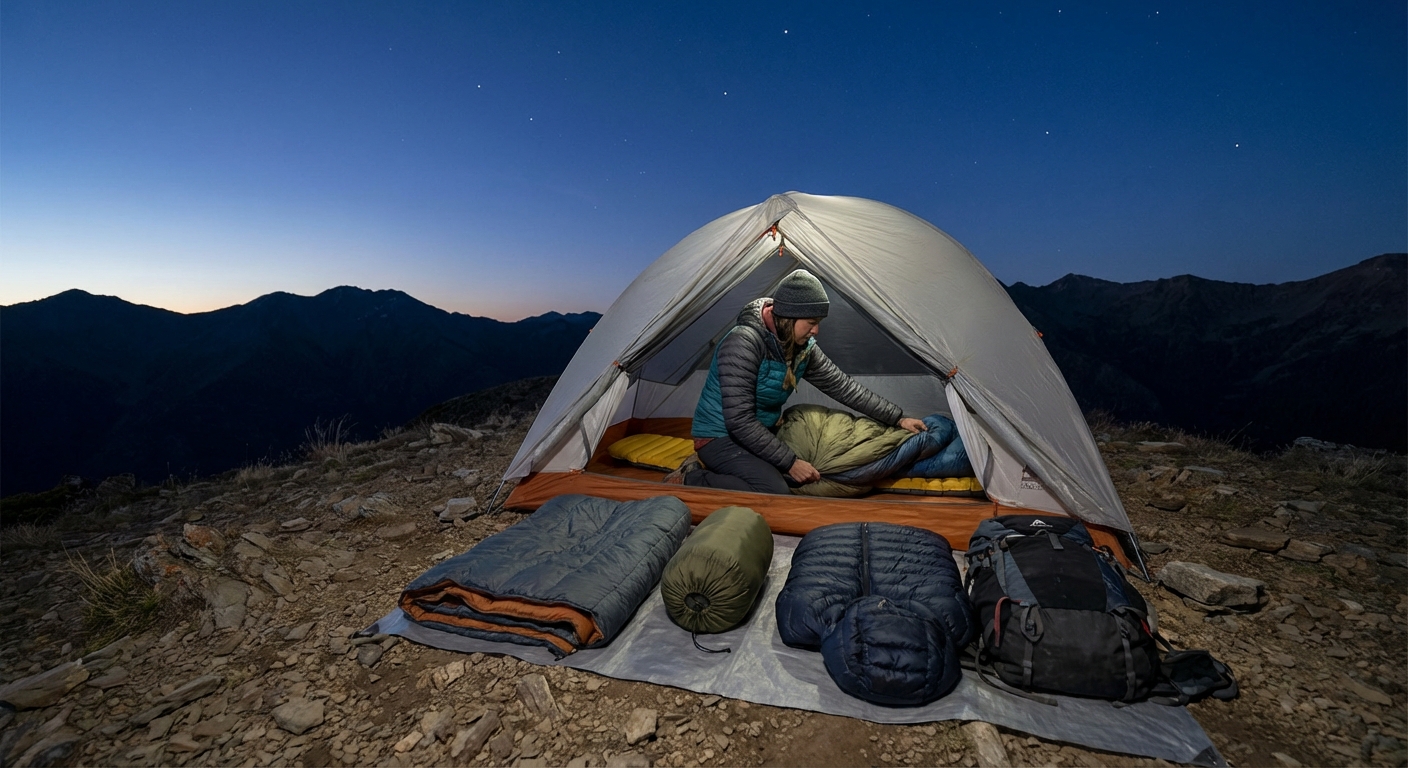
You can hike all day in mediocre boots. You can’t hike day two if you shiver all night and wake up wrecked.
Why Your Sleep System Matters More Than Your Boots
A solid sleeping system isn’t about luxury—it’s about recovery, safety, and keeping your head screwed on straight when the weather turns. This guide walks through how to build a reliable sleep setup, from budget basics to expedition-ready, with hard-earned trade‑offs laid bare.
The Three Pieces of a Sleep System
A complete backpacking sleep system has three core components:
Insulation – Sleeping bag or quilt
Ground protection – Sleeping pad (and sometimes a groundsheet)
Shelter integration – How your bag/pad work with your tent, tarp, or bivy
Dial these in for your conditions and you’ll sleep warm and dry without hauling a brick.
1. Sleeping Bags vs Quilts: What Actually Works
Sleeping Bags: Full Coverage, Fewer Drafts
Best for: Cold sleepers, shoulder seasons, alpine trips.
Pros:
- Warmer for their rating, less draft-prone
- Familiar feel, easy to use
- Better for restless sleepers who roll around
- Heavier and bulkier than comparable quilts
- Zippers can snag or fail
- Budget: REI Trailbreak / Kelty Cosmic Down (entry-level, heavier but proven)
- Mid-range: REI Magma series, NEMO Disco (good warmth-to-weight, durable)
- Premium: Western Mountaineering Ultralite, Feathered Friends Hummingbird (pricey but bombproof and conservative temperature ratings)
Cons:
Field‑tested standouts:
Quilts: Lighter, More Modular
Best for: Thru‑hikers, gram‑counters, people who run hot.
Pros:
- Lighter and more compressible
- Easy to vent in variable temps
- Versatile for hammocks, ground, and different seasons
- More draft risk, especially in wind
- Learning curve to strap and seal properly
- Budget: Hammock Gear Economy Quilt series
- Mid-range: Enlightened Equipment Revelation/Enigma
- Premium: Katabatic Gear Flex/Alsek (excellent pad-attachment system, very efficient)
Cons:
Field‑tested standouts:
Rule of thumb: If you’re not sure what you prefer and often camp in 20–40°F (-6–4°C) shoulder seasons, start with a sleeping bag. Once you know your cold tolerance, consider a quilt.
2. Down vs Synthetic Insulation: Know the Trade-Offs
Down: Light, Warm, Demands Respect
Pros:
- Highest warmth‑to‑weight
- Packs tiny
- Long lifespan if cared for properly
- Loses loft when soaked
- More expensive
- Needs gentle washing and storage
Cons:
If you’re hiking in the Rockies, Sierra, or any generally dry climate, down is king.
Synthetic: Forgiving, Bulky Workhorse
Pros:
- Retains some warmth when wet
- Cheaper
- Less fuss about moisture
- Heavier and bulkier for same warmth
- Breaks down faster over time
Cons:
Good choice for coastal rainy regions, new hikers on a budget, or loaner/abuse gear.
3. Sleeping Pads: Where Most New Hikers Screw Up
You lose more heat to the ground than to the air. Your pad choice is as important as your bag.
R‑Value: The Only Number That Matters
R‑value measures insulation. Higher = warmer. Combine pads by adding R‑values.
R‑Value guide:
- 1–2: Summer only, warm climates
- 2–3: 3‑season for warm sleepers
- 3–4: Solid 3‑season baseline
- 4–5+: Winter, shoulder-season in exposed terrain
Pad Types
Closed‑cell foam (CCF)
Indestructible, cheap, but bulkier and less comfy. - Ex: Therm-a-Rest Z Lite Sol, NEMO Switchback - Great as backup, sit pad, or layering under air pads in the cold.
Air pads (non-insulated)
Lightweight and comfy but cold without insulation. Mostly for hot climates.
Insulated air pads
Best warmth-weight balance, but vulnerable to punctures. - Mid-range: Therm-a-Rest NeoAir XLite NXT, NEMO Tensor - Premium: Therm-a-Rest XTherm for winter and alpine
Field tip: For cold or rocky ground, run an insulated air pad (R 3–4) on top of a foam pad. Comfort, redundancy, and serious warmth.
4. Weight vs Durability vs Price: Pick Your Compromise
You can have two of these three: light, durable, cheap.
Budget Build (New Hiker / Weekend Trips)
- Bag: Synthetic 20–30°F – $120–$200 – 2.5–3.5 lb
- Pad: Foam or basic insulated air pad – $40–$120 – R 2–3
- Total system weight: 3.5–5 lb
- Use case: Summer to mild shoulder season, short trips, low altitudes.
Mid‑Range 3‑Season Workhorse
- Bag/quilt: 20°F down – $250–$450 – 1.8–2.5 lb
- Pad: Quality 3‑season insulated air – $180–$250 – R 3–4
- Total system weight: 2.8–3.5 lb
- Use case: Most hikers, most of the year.
Ultralight & Long‑Distance
- Quilt: 20–30°F Premium down quilt – $350–$500 – ~1–1.5 lb
- Pad: Lightweight insulated air (sometimes short / torso-length) – $200–$250 – 8–14 oz
- Total system weight: 1.8–2.5 lb
- Use case: Thru‑hikes, experienced hikers who know their limits and are meticulous with care.
5. Matching Your System to Real Conditions
Ask These Questions Before You Buy
- Low temps at your campsites? Not city forecast—ridge or valley lows.
- Humidity and precipitation? Wet climates demand more margin.
- How cold do you usually sleep? Cold sleepers need +10°F buffer.
- Trip length? Longer hikes reward lighter gear more.
Simple rule:
- Take the coldest temp you realistically expect.
- Choose a bag/quilt rated 10°F lower than that if you’re an average sleeper, 20°F lower if you run cold.
6. Field-Proven Warmth Tricks (That Actually Work)
- Keep your pad dry and intact. A slow leak can cost you 20°F of comfort.
- Sleep clothes only. Dry base layer, dry socks reserved just for sleeping.
- Eat before bed. A fatty snack (peanut butter, cheese) is a furnace in your gut.
- Use your puffy jacket smartly. Layer it inside the bag around your core, not bunched up.
- Seal drafts. Cinch the collar, close gaps around your neck/shoulders.
- Hot water bottle: Fill a Nalgene with hot (not boiling) water, toss it at your feet.
7. Care and Maintenance: Make It Last a Decade
At Home
- Store loose. Never long‑term compress your bag or quilt. Use a big cotton or mesh sack or hang it.
- Wash sparingly. Every 20–40 nights or when loft visibly suffers.
- Use down‑specific or synthetic‑specific cleaner.
- Front‑load washer, gentle cycle, low spin.
- Dry low heat with tennis balls until fully lofted.
- Avoid body oils: Sleep in a thin base layer to keep fabric cleaner.
In the Field
- Keep it dry at all costs. Use a dry bag or compactor bag liner in your pack.
- Air it out daily. 5–10 minutes in the sun or breeze when you can.
- Pad protection. Use a groundsheet in rocky or thorny camps. Patch leaks immediately.
8. When to Upgrade vs When to Adapt
You don’t need a perfect setup to get out there. You need a reliable one.
Upgrade your sleep system when:
- You regularly wake up cold despite doing everything right.
- Your trips are getting longer and your pack weight is holding you back.
- Your current bag has lost loft or your pad keeps failing.
- Temps are just a bit below your rating—use warmth tricks and better site selection.
- You’re unsure what style you prefer—borrow or rent before dropping serious cash.
Adapt with skills when:
Final Word
A bombproof sleep system is a force multiplier. It keeps your head clear, your body recovered, and your risk profile sane when weather and terrain pile on.
Start with what you can afford, protect it from moisture, and learn how to squeeze every degree of warmth from it. Gear helps, but skill and discipline do the heavy lifting overnight.