
If your idea of going light is shivering in a Mylar burrito and bragging about it online, this article isn’t for you.
Ultralight Isn’t About Suffering
Smart ultralight is about removing dead weight while keeping enough margin to handle bad nights and bad decisions. Your sleep system is the biggest place to win—or lose—that fight.
Here’s how to slim your setup without crossing the line into dumb.
Step 1: Audit What You’re Actually Carrying
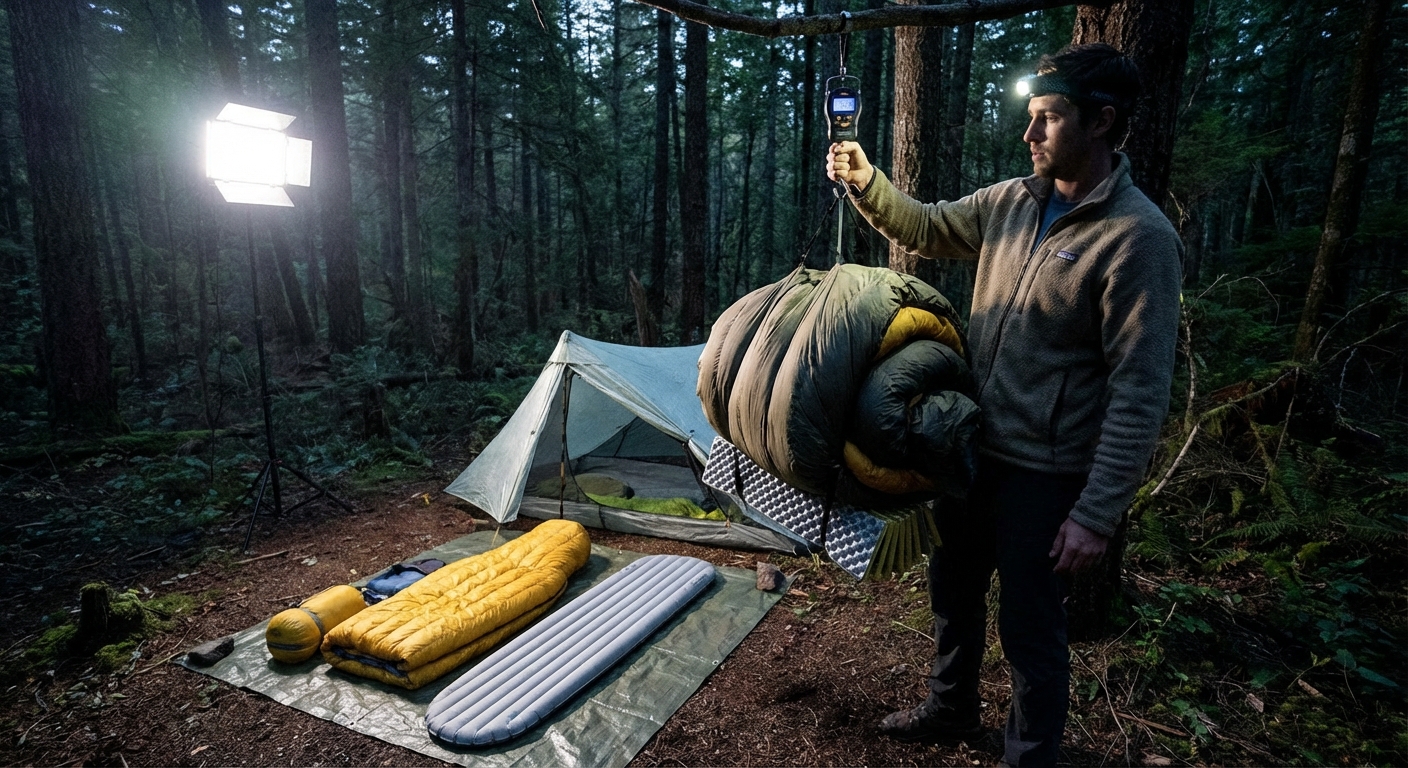
Lay it all out on the floor:
- Sleeping bag or quilt
- Sleeping pad(s)
- Pillow (if you use one)
- Liners, extra blankets, inflatable crap you never use
Weigh each item. Guessing is how people end up with 6 lb “lightweight” kits.
Write down:
- Item
- Weight
- Temperature rating (bag/quilt, pad R‑value)
- How often it’s actually necessary
Now you’ve got a baseline.
Step 2: Cut the Right Pounds First
Some things save big weight with little sacrifice. Others are bad trades.
High-Impact, Low-Risk Weight Cuts
- Ditch the overbuilt pillow.
- Replace a 6–10 oz pillow with a 1–3 oz inflatable + clothing.
- Trim extra stuff sacks.
- One dry bag for your sleep insulation is all you need.
- Drop the liner unless you truly need it.
- If it’s not freezing and you only might need +5°F, skip it and wear base layers.
These changes alone can pull 6–12 oz without touching warmth.
Medium-Risk, High-Reward Cuts
- Switch from synthetic bag to down.
- Savings: ~10–20 oz for same warmth
- Cost: Higher price, more care required
- Switch from bag to quilt.
- Savings: ~6–12 oz
- Cost: Draft risk, learning curve, no integrated hood
- Drop from a 0–10°F bag to 20–30°F + smart clothing.
- Savings: ~8–20 oz
- Cost: Smaller safety margin in surprise cold snaps
These are the moves that take your system from heavy to legitimately light.
Step 3: Know Your Non-Negotiables
Three lines you shouldn’t cross just to see a lower number:
- Skimping on ground insulation.
R‑value is not optional. No pad, no sleep. No sleep, no miles.
- Being under‑bagged by more than 10°F without serious skill.
Running a 30°F quilt into the teens is possible but not for your first shoulder‑season trip.
- Ignoring your personal cold tolerance.
If you’re always cold in a 20°F bag at 30°F, going lighter/colder is just self‑sabotage.
Ultralight that fails at 3am is just bad planning.
Step 4: Build Smart Ultralight Sleep Setups
Let’s walk through some field‑tested configurations that cut weight but stay sane.
Setup A: Lightweight 3-Season Starter (~2.8–3.2 lb total)
For: Most hikers in standard 3‑season conditions.
- Bag: 20°F down mummy bag
- Weight: 28–34 oz
- Ex: REI Magma 15, Kelty Cosmic Down 20
- Pad: R 3–4 insulated air pad
- Weight: 12–17 oz
- Ex: Therm-a-Rest NeoAir XLite NXT, Big Agnes Insulated AXL (careful with durability)
- Pillow: 2–3 oz inflatable or clothing bag
Easy to use, forgiving, and significantly lighter than budget synthetics.
Setup B: True Ultralight Quilt System (~1.8–2.3 lb total)
For: Thru‑hikers, experienced lightweight backpackers.
- Quilt: 20–30°F down quilt
- Weight: 18–24 oz
- Ex: Enlightened Equipment Enigma 20, Katabatic Flex 22
- Pad: R 3+ ultralight pad
- Weight: 8–13 oz
- Ex: Therm-a-Rest UberLite (mild temps), XLite NXT Small, Sea to Summit Ether Light XT Insulated
- Supplement: 2–3 oz foam sit pad under torso if pushing low temps
Aggressive but proven on long trails in real 3‑season conditions.
Setup C: Minimalist Shoulder-Season (~2.4–2.9 lb total)
For: Experienced hikers pushing down to ~20°F.
- Quilt: Warm 20°F quilt with extra width
- Weight: 22–28 oz
- Pads: R 2.5–3 air pad + thin CCF foam (R 1.5–2)
- Combined R: 4–5+
- Combined weight: 15–20 oz
- Clothing: Planned use of puffy jacket, warm base layers, hat
Requires discipline, but lets you carry one sleep system across a wide temp band.
Step 5: Weight vs Durability: Where to Draw the Line
Ultralight gear is often thinner, not magical. Less fabric, smaller baffles, finer denier.
Smart Compromises
- Bags/quilts:
- 10D–15D shell fabrics are a good balance. 7D can work but hates abrasion.
- Pads:
- The lightest inflatables (UberLite-class) trade serious durability for grams.
- If you’re hard on gear or off‑trail a lot, XLite or Tensor‑class is a safer bet.
Where You Should Not Cheap Out
- Pad R‑value and reliability. A slightly heavier, tougher pad is worth every ounce.
- Baffle quality on quilts/bags. Cheap construction = cold spots and short lifespan.
If you routinely cowboy camp, camp on rock, or forget your groundsheet, don’t buy the flimsiest pad available. You and your repair kit will regret it.
Step 6: Field Techniques That Let You Carry Less
If you want to safely run a lighter system, your skills have to pick up the slack.
1. Site Selection
- Get out of the wind: behind trees, boulders, or terrain features.
- Avoid low, cold sinkholes in valleys when temps are borderline.
- Use natural duff (needles, grass) under your shelter when possible for extra insulation.
2. Warmth Routine
- Food first. Eat a solid, fatty snack before bed.
- Go to bed warm. Do quick jumping jacks or a brisk walk before climbing in.
- Dry layer only. Strip damp hiking clothes, sleep in dry base layers.
3. Quilt-Specific Skills
- Practice pad strap setups at home.
- Use a wide quilt if you toss and turn—saves you from constant drafts.
- Keep your head and neck sealed with a hooded puffy + beanie.
Skill gives you a temperature buffer without adding gear.
Step 7: Care Tips So Your Ultralight Gear Doesn’t Die Young
You paid good money to save those ounces. Treat it like it matters.
On Trail
- Use a groundsheet under inflatables.
- Keep your bag/quilt in a dry bag or plastic pack liner.
- Air out insulation in the morning sun or at lunch.
- Keep sharp metal (stoves, stakes) away from thin shell fabrics.
At Home
- Store uncompressed in a large cotton/mesh bag or hanging.
- Wash infrequently with proper down or synthetic wash.
- Keep pads partially inflated or flat, never rolled tight for months.
Well‑maintained ultralight insulation can last a decade. Abused, it can be half‑dead after one hard season.
When Not to Go Ultralight on Sleep
Pull back from the ultralight cliff if:
- You’re heading into unfamiliar terrain or shoulder seasons
- You’re guiding or responsible for less‑experienced partners
- You can’t or won’t check accurate weather and elevation forecasts
- You’re a chronic cold sleeper
In those cases, carry the extra 8–16 oz. You’ll never regret being warm.
Final Take
Ultralight isn’t a personality trait; it’s a toolbox. Use it when the route, season, and your experience level all line up.
Trim the obvious fat, make smart swaps, and back it all up with better skills. That’s ultralight without the stupid—and it starts with a sleep system that’s lean, not reckless.