
Most sleeping bags and quilts don’t "wear out." They’re slowly killed by dirt, moisture, bad storage, and rough handling until they stop keeping you warm.
Gear Dies from Neglect, Not Just Use
If you want your sleep system to last through years of weekend trips or an entire thru‑hike, you need a care routine that’s as dialed as your packing list.
This is the practical, trail‑tested maintenance guide no one reads until their bag is already flat.
1. Protecting Your Insulation from Moisture
Down and synthetic both lose loft when wet. Down is worse, but neither likes to be soaked.
In Your Pack
- Use a liner or dry bag.
- Ditch the faith in "waterproof" packs.
- Keep wet gear out.
Heavy‑duty trash compactor bag or dedicated dry bag inside your pack. Your sleeping bag and puffy go inside. Non‑negotiable.
Seams leak. Roll‑tops roll wrong. Don’t gamble.
Rain jackets and damp clothes stay in an external pocket, not next to your bag.
In Camp
- Vent your shelter.
- Don’t cook in your bag.
- Watch where you set it.
Condensation is slow death. Crack doors, pitch higher when weather allows.
Steam and spills add up. Sit on your pad instead.
Never drop your bag on snow or wet ground while setting up.
A dry bag that weighs a few ounces will save you from pounds of soggy misery.
2. Managing Dirt, Body Oils, and Funk
Dirt and oils coat the fibers, making them clump and lose loft. You get colder, then blame the bag.
Prevent It Upfront
- Dedicated sleep clothes.
- Use your pad, not the ground.
- Keep food away.
Light thermal top, bottom, and socks that never leave the tent.
Don’t sit or lounge in your bag outside.
Crumbs and grease invite critters and stains.
Dealing with Smell on Trail
- Air out daily.
- Spot clean.
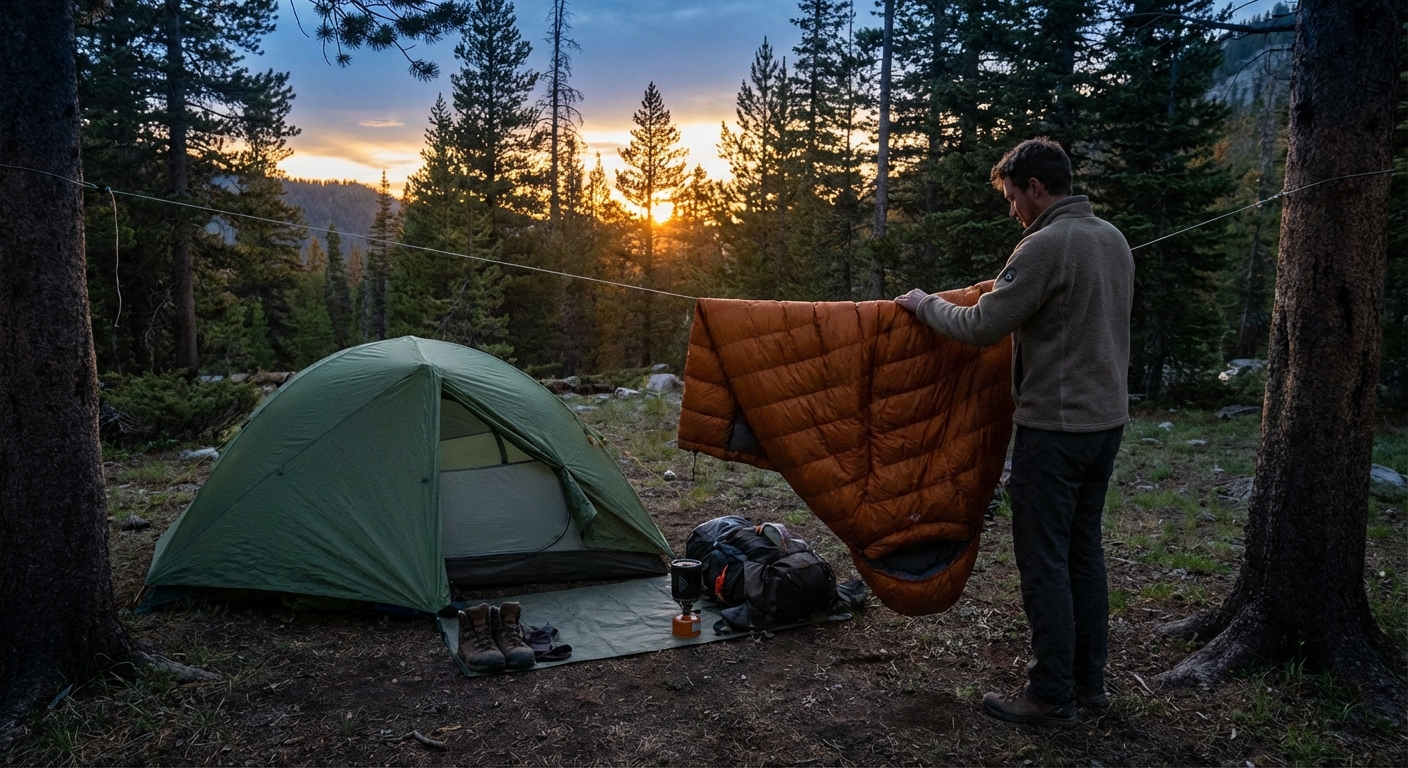
Turn your bag/quilt inside out over your tent or a bush when the sun’s out.
For obvious grime, use a small drop of unscented soap and a bandana; dab, don’t scrub.
If you keep your skin and base layers reasonably clean, you’ll wash your bag far less—and it’ll stay warmer longer.
3. Simple Pad Maintenance That Prevents Long Nights
A blown pad at 2am is a fast track to a miserable night.
Before the Trip
- Test for leaks at home.
- Know your patch kit.
Inflate fully, press under water in a tub or wipe with soapy hands. Bubbles = leak.
Read directions before you’re cold and frustrated.
In Camp
- Clear the ground.
- Use a groundsheet.
- Don’t over‑inflate.
Rocks, goatheads, thorny bits—all gone before the pad comes out.
Polycryo sheet, Tyvek, or even an old footprint can save your pad.
Warm air expands; what’s firm at dusk can be over‑pressured at midnight.
If (When) It Leaks
- Inflate, listen close, and feel with your cheek for airflow.
- If it’s subtle, wipe with a little water and soap, hunt for bubbles.
- Mark the spot with a pen or dirt scratch.
- Dry it, then patch per the kit instructions.
This is why many experienced hikers still carry a thin foam pad as backup in shoulder seasons. It’s cheap insurance.
4. Washing Your Bag or Quilt Without Ruining It
Eventually, you need to wash it. Do it wrong, and you’ll strip oils from the down, tear baffles, or clump the fill.
How Often to Wash
- Light use (a few trips/year): Every 1–2 years.
- Heavy use (thru‑hiker levels): Every 30–50 nights, or when loft clearly suffers.
General Rules
- Use the right cleaner.
- Front‑loader washer only.
- Gentle cycle, cold water.
Down-specific wash for down; synthetic-specific or mild soap (non‑detergent) for synthetic.
No agitators. They rip baffles.
Extra rinse if your machine allows.
Drying
- Low heat, patience.
- Use dryer balls or tennis balls.
- Make sure it’s truly dry.
Dry on low or air‑dry with frequent checks.
They break up clumps. Check every 20–30 minutes.
Damp down molds in storage. Keep going until it feels light and fully lofted.
If you’re nervous, many gear shops and some laundromats offer professional washes for outdoor gear. It costs more but beats wrecking a $500 bag.
5. Storage: Where Most People Screw Up
Stuff sacks are for trail. They’re not a house.
At Home
- Store loose.
- Cool, dry place.
- No airtight totes.
In the big cotton/mesh sack it came with, or hang it in a closet. Never long‑term compressed.
Basements with moisture or hot attics are bad news.
Let the insulation breathe.
On Trail
- Only compress when moving.
- Avoid tight, overstuffed sacks.
At camp, pull it out early so it can breathe and loft.
You’re not trying to crush the life out of the fill.
Proper storage alone can double the usable life of a good down bag.
6. Small Repairs That Add Years
Tiny holes become big problems if you ignore them.
Shell Fabric Tears
- Field fix: A strip of Tenacious Tape on a clean, dry surface. Round the corners so it doesn’t peel.
- At home: You can keep the tape or do a more permanent patch if it’s large.
Loose Stitching
- Keep a small needle and thread in your repair kit.
- Simple seam repairs will prevent bigger blowouts.
Zippers
- Clean them.
- Fix snag habits.
Dirt and grit chew sliders. Brush lightly or rinse.
Always pinch the fabric away from the zipper with your off hand.
If a slider starts failing, many gear shops can replace it for less than the cost of a new bag.
7. Field Habits That Keep Your System Strong
A few simple rituals make a huge difference over a season.
- Bag comes out last, goes away first.
- Always use some kind of ground barrier.
- Rotate your bag.
- Be picky about where you sleep.
Don’t set it out until camp is organized and ground is clear.
Even in tents, a footprint or polycryo sheet cuts abrasion and moisture.
If you use it 50+ nights a year, rotate shoulders/zip side occasionally to spread wear.
Avoid sap, thorns, and sharp branches.
These habits become automatic after a few trips. Your gear will reflect that.
8. When It’s Time to Retire or Replace
No amount of care keeps gear alive forever. Watch for:
- Persistent cold spots even in mild temps
- Flattened baffles that never loft, especially in hips/shoulders
- Shell fabric thinning to transparency or constant new pinholes
- Pad leaks appearing in new places every trip despite patches
You can sometimes restore loft with a deep, proper wash and dry, but when that stops helping, start budgeting for a replacement.
If money’s tight, consider:
- Buying used from reputable backpacking forums or consignment shops
- Going synthetic as a stopgap; heavier but cheaper and functional
Final Perspective
A well‑made sleeping bag or quilt that’s treated right isn’t a one‑season consumable. It’s a long‑term tool that shapes how hard you can push and how far you can go.
Guard it from moisture, dirt, and careless handling. Patch problems early. Store it like you plan to still be using it ten years from now.
You’ll sleep warmer, spend less, and your gear closet won’t be a graveyard of flattened, forgotten bags.