
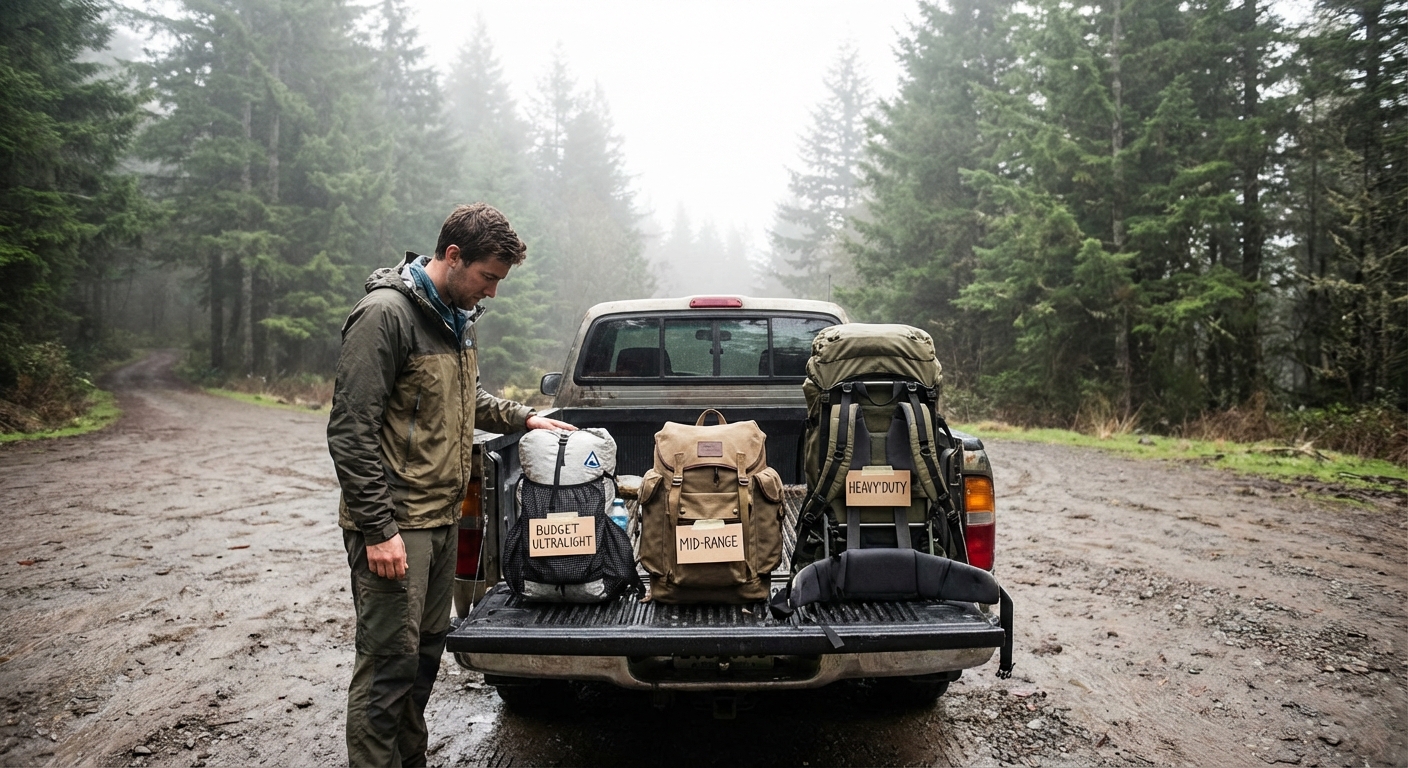
Most packs look great on a gear flatlay. That doesn’t mean they’ll survive getting dragged over talus or stuffed with seven days of food.
Why Your Pack Needs to Match Your Trail, Not Your Instagram
Below are field-tested backpack recommendations sorted by budget and trail type. All are based on real-world use by hikers who care more about miles than marketing.
Note: Models change often. Treat this as a decision map, not gospel. Always double-check current specs.
Budget Packs: Under $150
For new hikers and budget-conscious backpackers, price matters. You’ll take a small hit in weight but can still get a solid, reliable rig.
1. Weekend Woods Wanderer
Use case: 1–3 nights, moderate trails, 20–30 lb loads.
What to look for:
- 40–50L volume
- Stout hip belt, real internal frame
- 210–420D fabric, simple pockets
Representative options:
- REI Co-op Trailbreak / Traverse (entry lines) – Heavier but durable and backed by a solid return policy.
- Kelty Coyote / Redwing – Old-school workhorses, comfortable for moderate loads, not ultralight but trustworthy.
Trade-offs:
- Heavier (3.5–5 lb)
- Less refined suspension and fewer fit adjustments
- Bulkier when mostly empty
Best for: New backpackers figuring out their kit on local trails.
2. Budget Long-Weekend Pack
Use case: 2–4 nights, mixed terrain, 25–35 lb loads.
Look for packs that punch above their price:
- Sierra Designs Flex Capacitor (when on sale) – Weight is reasonable, volume is highly adjustable (great if you’re still dialing gear).
- REI Co-op Flash (previous seasons / sale) – Good value if you catch a discount.
Why they work:
- Real suspension systems that transfer weight to hips.
- Not the lightest, but proven in the field by a lot of hikers.
Mid-Range Packs: $150–$260 (Best Value Zone)
This is the sweet spot for most serious hikers: solid durability, good comfort, and reasonable weights.
3. Classic Three-Season Backpacker
Use case: 3–7 nights, 25–35 lb loads, most non-winter trips.
Key features:
- 45–60L capacity
- Internal frame or frame stays
- Front stretch pocket, side water bottle pockets
- 2.5–3.25 lb ideal
Field-proven picks:
- Osprey Exos / Eja – Excellent ventilation, comfortable up to ~30 lb, very common on long trails.
- Gregory Paragon / Maven – Robust suspension, good for rough terrain or mixed travel.
- Granite Gear Crown series – Simple, light, and often more durable than it looks.
Why they endure:
These packs have thousands of real-world miles behind them. They’re forgiving if you’re not perfectly dialed and tough enough for rocky, rooty trails.
4. Rugged Trekking and Off-Trail Roaming
Use case: Rough, brushy trails, scrambling, occasional off-trail, and heavier loads.
What to prioritize:
- Tough fabrics (210–420D+)
- Simple but bombproof pocket layout
- Strong hip belt with good lumbar support
Good examples:
- Deuter Aircontact / Futura lines – Heavier, but the comfort and durability on rough terrain are real.
- Mystery Ranch (smaller trekking models) – Overbuilt and heavier, excellent for abuse and heavy loads.
Trade-offs:
- You’ll carry extra pound or so.
- Feels like overkill on easy groomed trails.
Premium and Ultralight Packs: $260+
Here you’re paying for cutting-edge materials, smart design, and ounces shaved—sometimes at the cost of ride comfort or ruggedness.
5. Thru-Hiker Workhorses
Use case: AT, PCT, CDT, and other long trails with weeks or months of use.
Core priorities:
- 50–60L capacity
- 1.5–3 lb
- Durable enough for 2,000+ miles but light enough to not hate every climb
Common thru-hiker choices:
- ULA Circuit – Beloved for comfort under 30–35 lb and good durability.
- Gossamer Gear Mariposa – Excellent pocket layout, comfortable with typical UL loads.
- Hyperlite Mountain Gear Southwest – Dyneema shell, great in wet conditions, simple and tough.
Field notes:
- Dyneema is abrasion-resistant but can puncture; reinforcing key wear points with tape isn’t a bad idea.
- These packs expect you to have relatively compact, lighter-weight gear.
6. Alpine and Harsh-Condition Specialists
Use case: Alpine routes, shoulder-season storms, off-trail abuse.
You want:
- Weather resistance
- High-denier fabrics or advanced composites
- Minimal dangling features (less to snag on rock or ice)
Representative models:
- HMG Ice or Windrider series – Stripped-down durability and weather resistance.
- Crux, Cilogear, or mountaineering-specific models – Tough materials and clean profiles.
Trade-offs:
- Sacrifices some comfort and convenience for minimalism and durability.
Choosing by Trail Type
Groomed Long Trails (AT, PCT, Camino-style paths)
- Priority: Weight and all-day comfort.
- Typical pack: 50–60L, 1.8–2.8 lb.
- Good choices: ULA Circuit, Gossamer Gear Mariposa, Osprey Exos/Eja.
Rocky and Rooty Trails (Adirondacks, Whites, Scottish Highlands)
- Priority: Durability, secure fit on steep grinds.
- Typical pack: 45–60L, 2.5–4 lb.
- Good choices: Deuter Aircontact/Futura, Gregory Paragon/Maven, burlier Granite Gear models.
Desert and High-Exposure Routes
- Priority: Capacity for water carries, sweat-resistant fit, simple layout.
- Typical pack: 55–65L, 2–3.5 lb.
- Good choices: HMG Southwest (55L), ULA Circuit/Ohm, tough midweight packs with good hip belts.
Don’t Ignore Fit – Even With Good Packs
The best-recommended pack is trash if it doesn’t fit you.
Basic fit checks:
- Match torso length to sizing chart.
- Hip belt rides on your hip bones, not around your gut.
- With 20–25 lb inside, shoulder straps wrap snug without digging and without gaps.
Walk around the store or your house for 15–20 minutes under load. If you feel sharp pressure or pinching, it won’t magically improve at mile 12.
Care Tips for Every Price Range
No matter what you paid, abuse will kill a pack early.
Protect High-Wear Zones
- Reinforce inside of the bottom panel with tape if you set your pack on rough ground a lot.
- Don’t stash stoves, sharp tent stakes, or crampons loose inside—use a protective sack.
Keep It Clean
- Rinse off mud and salt with lukewarm water.
- Spot clean with mild soap and a sponge.
- Avoid machines: washers and dryers chew up coatings and fabrics.
Store It Smart
- Hang or lay flat in a dry space.
- Loosen all straps to give foam and webbing a break.
Quick Decision Matrix
- On a tight budget, mostly weekend trips? Get a rugged budget or mid-range 45–55L pack. Don’t obsess over ounces yet.
- Hiking multiple week-long trips each year? Step up to a solid mid-range pack with a real frame and proven durability.
- Planning a thru-hike or multiple big trips? Consider a premium or UL pack only after your sleeping bag, shelter, and clothing system are dialed in.
Your backpack doesn’t need to be the lightest, newest, or flashiest thing on the trail. It just needs to ride well, survive the abuse you throw at it, and carry your gear without making you curse at every climb.