
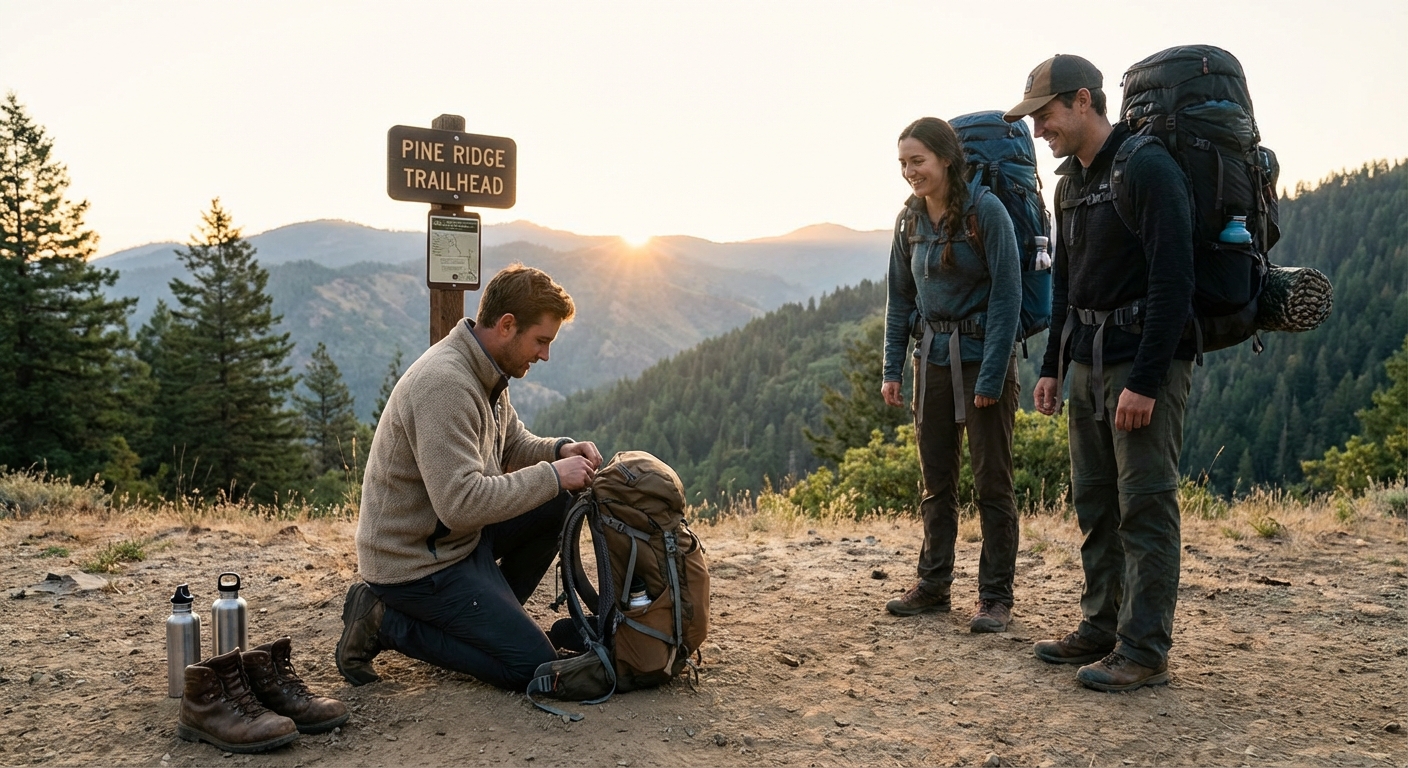
Before you start obsessing over fabrics and fancy suspension systems, be honest about how you actually hike.
Know Your Miles Before You Pick Your Pack
- Weekend warrior (1–3 nights): You’re carrying comfort items, bigger meals, maybe a camp chair.
- Section hiker (3–7 nights): You need efficiency, but you’re not living out of your pack for months.
- Thru-hiker (weeks to months): Ounces matter, durability matters more, and comfort is non‑negotiable.
Your backpack is a tool. If it doesn’t match your style and mileage, you’ll either hate it or destroy it.
Volume: Stop Overbuying Pack Size
Most hikers walk around with packs far bigger than they need. More volume usually means more weight—and more temptation to haul junk you won’t use.
Rough volume guidelines:
- 20–30L: Fast day hikes, hut trips, or ultra‑minimal overnights.
- 35–45L: Lightweight weekend trips in mild conditions.
- 45–55L: Sweet spot for many 3–5 day trips with modern lightweight gear.
- 55–70L: Winter loads, bulkier gear, or long food carries (7+ days).
If you regularly need more than 65L, you either:
Have extremely bulky gear, or
2. Are packing your fears.
Downsize your gear first, then your backpack.
Weight vs Durability: The Real Trade-Off
Every pack sits somewhere on the triangle of weight, durability, and comfort. You don’t get all three at maximum.
Ultralight (UL) Packs
- Weight: 16–32 oz (450–900 g)
- Materials: Dyneema composite, ultralight ripstop nylon, Ultra, etc.
- Great for: Thru-hikers, weight-conscious backpackers with dialed-in systems.
- Risks: Less padding, can feel harsh under heavy loads, thinner fabrics are more vulnerable to abuse.
Field-tested UL standouts (check current versions & pricing):
- Gossamer Gear Mariposa (around 60L): Good balance of comfort and low weight for loads up to ~30–35 lb.
- ULA Circuit (68L-type): Tough enough for long trails, still relatively light, favored on the AT and PCT.
- Hyperlite Mountain Gear Southwest (40–55L): Dyneema, water-resistant, very popular with long-distance hikers and wet-climate folks.
Midweight Workhorse Packs
- Weight: 2.5–4 lb (1.1–1.8 kg)
- Materials: 210–420D nylon, Robic, ripstop blends.
- Great for: Most backpackers, mixed trips, beginners.
- Sweet spot: Reasonable comfort with 25–40 lb loads.
Reliable workhorses:
- Osprey Exos/Eja series (48–58L): Time-tested, great ventilation, solid frame for moderate loads.
- Deuter Aircontact / Futura series (varies): Heavier but extremely comfortable, ideal for heavier loads and rugged trekking.
- Gregory Paragon/Maven (50–68L): Strong suspension, good for rough terrain and mixed conditions.
Heavy-Duty Haulers
- Weight: 4–6+ lb (1.8–2.7+ kg)
- Materials: 420D+ fabrics, reinforced bottoms, steel or heavy aluminum frames.
- Great for: Guiding, mountaineering, hauling climbing gear, extended winter travel.
Don’t buy one of these unless you know you actually need to haul 45+ lb on a regular basis.
Price Tiers: Where to Spend and Where to Save
Budget (Under $150)
- Heavier fabrics, simpler frames, fewer features.
- Good for beginners and weekenders.
- Expect 3–5 years of regular use if treated well.
Look for:
- Solid hip belt (not a floppy strip of foam)
- At least 210D fabric on main body
- Simple, clean design over gimmicky pockets
Mid-Range ($150–$260)
This is where most good value lives.
- Strong materials, decent frames, respectable weight.
- Many proven models from major brands.
This tier is ideal for hikers who go out multiple times a year and care about fit, comfort, and durability.
Premium / Ultralight ($260+)
You’re paying for:
- Cutting-edge materials (Dyneema, Ultra fabrics)
- Top-tier design and frame engineering
- Significant weight savings
Worth it if:
- You backpack a lot, every year.
- You’ve already trimmed the rest of your kit.
- You know your torso length and fit preferences.
Fit: The Part Everyone Skips (And Regrets)
Bad fit is worse than a heavy pack. Weight in the wrong place grinds down your spine and hips.
Key fit points:
- Torso length: Measure from your C7 vertebra (bony bump at base of neck) to the top of your hip bones (iliac crest). Match this to the pack’s size chart.
- Hip belt: Should wrap the top of your hip bones, not your waist. The buckle should close with 3–6 inches of strap remaining on each side.
- Shoulder straps: Should curve comfortably without gouging your neck. The anchor point should sit roughly 1–2 inches below your C7 when the load lifters are tensioned lightly.
- Load lifters: Should angle at 30–45° from the straps to the top of the frame. If they’re horizontal, the torso is too long.
Always test fit with weight: throw in 20–30 lb of water jugs, cinch everything down, and walk for 15–20 minutes.
Suspension and Comfort: What Actually Matters
Ignore marketing fluff and check these components:
- Frame: Internal stays, framesheet, or a rigid back panel to transfer weight to the hips.
- Hip belt structure: Thick isn’t always better; you want firm foam that doesn’t collapse.
- Shoulder padding: Enough for your usual load; too much can create hot spots.
- Ventilation: Trampoline backs breathe better, but push the load away from your spine. Closer-fitting backs carry more efficiently but run hotter.
For thru-hikes, prioritize load transfer and comfort over maximum ventilation.
Organization: Pockets, Access, and Real-World Use
More pockets aren’t always better. They’re just more places to lose gear.
Proven layout for most hikers:
- Main tube: Shelter, sleep system, clothes, food.
- Front stretch pocket: Wet gear, rain jacket, quick-access items.
- Side pockets: Water bottles, shelter poles.
- Hip belt pockets: Snacks, small items, phone.
Top lids (brain compartments) are optional. Nice for winter or guiding, but plenty of long-distance hikers go without them.
Care and Maintenance: Make Your Pack Last
Even tough packs fail early if abused. Basic upkeep goes a long way.
On the Trail
- Don’t use your pack as a camp chair on rocks day after day. Use a sit pad or log.
- Lift by haul loop, not by a single shoulder strap.
- Avoid dragging the pack on granite or abrasive ground.
- Keep total load within the rated range (often stated by the manufacturer). Overloading destroys hip belts and stitching.
At Home
- Rinse off salt and sweat with lukewarm water and a soft sponge.
- If grimy, use mild soap—no harsh detergents or machine washing.
- Hang dry completely before storage.
- Store in a cool, dry place uncompressed (not stuffed in a bin under heavy gear).
Field Repairs
Carry a basic repair kit:
- Needle and strong thread or dental floss
- Tenacious Tape or similar repair tape
- Small buckle replacements (side release and tension locks)
- A few safety pins
A 5-minute repair on trail can give you hundreds more miles.
Matching the Pack to the Hike: Quick Scenarios
- Overnighter on well-marked trails: 35–45L, midweight pack, basic frame, under 30 lb total.
- Five-day section hike: 45–55L, midweight or light pack with decent frame, 25–35 lb.
- AT / PCT / CDT thru-hike: 50–60L, 2–3 lb pack with proven durability and simple layout. Plan for 25–35 lb loads out of town.
- Winter weekend with snow gear: 60–70L, robust frame, burly fabric, think more about durability than grams.
Bottom Line
Pick the smallest, most durable, and most comfortable pack that will carry your realistic load for your realistic trips. Ignore trends, try packs under weight, and don’t be afraid to return or resell a pack that doesn’t fit you right.
Your backpack is not just a bag—it’s your mobile home. Treat the decision with the same seriousness you’d give your boots or your sleep system, and the miles will feel a lot shorter.