
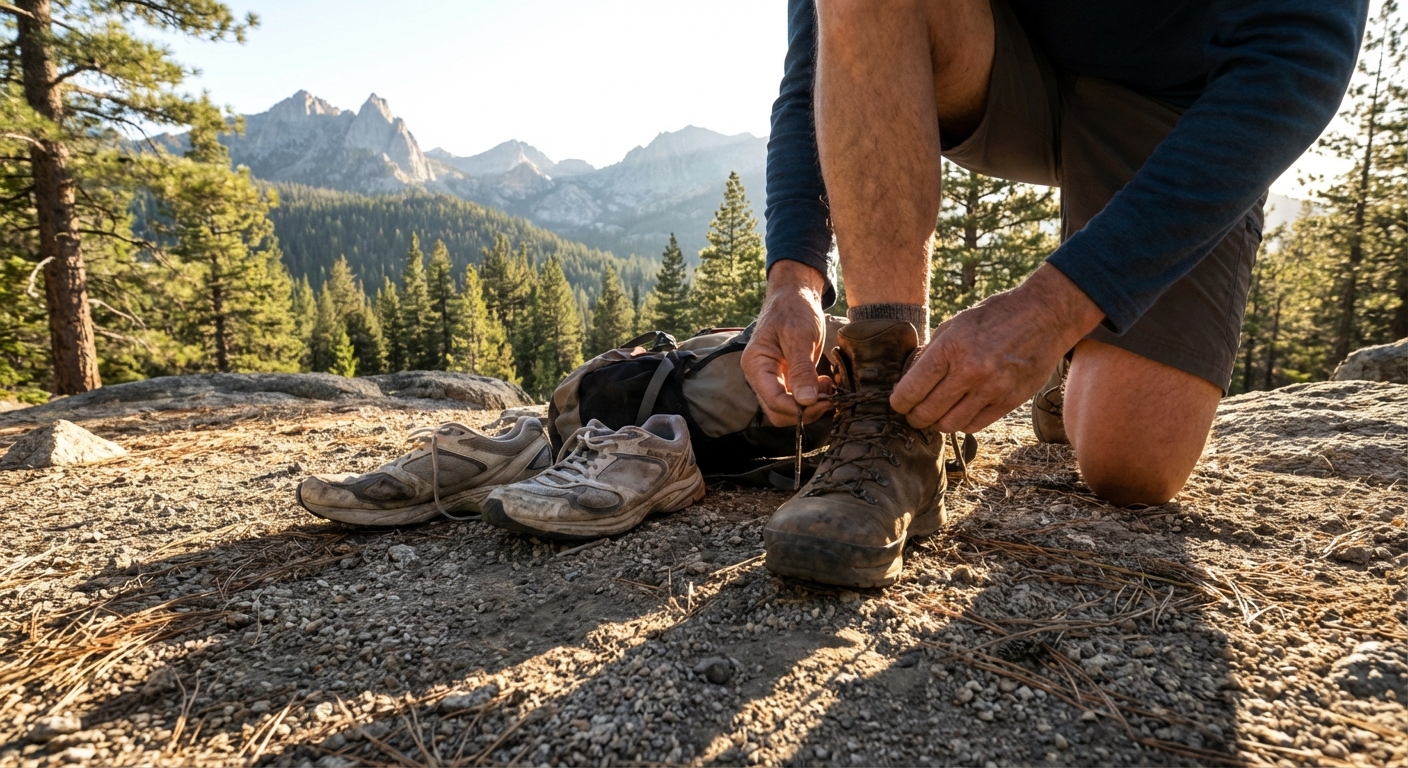
You can limp through a day with a mediocre backpack. Try doing that with blown-out boots and you’ll be taping your feet together in a trailhead parking lot.
Why Your Boots Matter More Than Your Backpack
Your hiking boots are your suspension system, traction control, and impact protection. Get them right and you move efficiently, stay dry, and avoid trip-ending blisters. Get them wrong and every mile feels like debt you’re paying with interest.
This guide breaks down how to pick boots that match how and where you actually hike.
Step 1: Be Honest About Your Terrain and Mileage
Before looking at brands or fabrics, define your real use case:
- Weekend day-hikes (0–10 miles, marked trails)
You don’t need mountaineering tanks. Focus on lighter boots or even burly hiking shoes with decent ankle coverage and grip.
- Backpacking trips (2–6 days, 25–40 lb pack)
You need more support underfoot and around the ankle, with reliable protection from rocks and roots.
- Thru-hiking and long trails (hundreds of miles)
Every ounce counts, but so does durability. This is where weight vs. longevity is a real calculation, not a spec sheet number.
- Off‑trail, scree, winter, and alpine routes
Prioritize protection, torsional stiffness, and edging ability. You’re basically in light mountaineering territory.
If you mostly walk groomed trails with a daypack, a 3 lb leather boot is overkill. If you’re side-hilling through talus, a soft trail runner is a bad joke.
Key Boot Types (And Who They’re For)
1. Lightweight Hiking Shoes / Mid Boots (1.5–2.2 lb/pair)
- Best for: fast day-hikes, hut trips, experienced hikers with strong ankles
- Pros: light, break in fast, usually more breathable
- Cons: less underfoot protection, shorter lifespan, less warmth in shoulder seasons
- HOKA Anacapa Mid / Low GTX – Cushy and light; great for hikers who want trail-runner comfort with a bit more structure.
- Salomon X Ultra 4 Mid GTX – Solid heel hold, good out-of-the-box comfort, excellent wet traction.
Field-tested picks:
2. Midweight Backpacking Boots (2.2–3 lb/pair)
- Best for: multi-day trips, mixed terrain, moderate packs
- Pros: balance of support and weight, solid protection, very versatile
- Cons: slower drying, can feel hot in summer, occasional break-in needed
- Lowa Renegade GTX Mid – A classic. Stiff enough for rough trails, comfortable for most feet, decent longevity.
- Salewa Mountain Trainer Lite Mid – Grippy outsole and good edging for rocky approaches; secure fit around the midfoot.
Field-tested picks:
3. Heavy-Duty Leather Boots (3+ lb/pair)
- Best for: heavy loads, off-trail abuse, long-term durability
- Pros: extremely durable, rebuildable (on some models), better snow and scree resistance
- Cons: heavy, real break-in required, hot in warm climates
- Zamberlan Vioz GTX – Tank-like but hikeable. Great heel lock and deep lugs that bite into mud and soil.
- Asolo Power Matic / TPS series – Stiff, supportive platforms ideal for rough terrain and heavy packs.
Field-tested picks:
Weight vs. Durability: The Real Trade-Off
Every hiker wrestles with the same question: lighter boots or longer-lasting boots?
Lighter Boots
- Pros: Less fatigue, faster pace, less knee and hip stress
- Cons: Soles wear faster, uppers blow out sooner, midsole cushioning packs down quicker
Expect 400–800 trail miles from most lightweight boots and shoes if you’re not abusive.
Heavier Boots
- Pros: Tougher uppers, thicker rubber, stronger stitching, more resole options
- Cons: More energy per step, slower, hotter, more punishing in long desert stretches
Expect 800–1500+ miles from a well-built leather boot if you care for it.
The right answer comes down to how many consecutive miles you hike and your injury history. Thru-hikers often lean light and replace footwear mid-trail. Weekend backpackers can justify heavier boots that will last years.
Price Tiers: What You Actually Get for Your Money
Budget ($90–$140)
- Materials: synthetic uppers, cheaper foams, generic rubber
- What you get: decent entry-level boots for maintained trails and occasional trips
- What you give up: outsole grip in tough conditions, long-term support, and durability
- Merrell Moab 3 (Mid or Low) – Not the lightest or toughest, but comfortable and affordable. Great first “real” hiking boot.
- Materials: better foams, name-brand membranes (Gore-Tex), refined fit
- What you get: sweet spot for most hikers – worthwhile performance without boutique pricing
- Salomon X Ultra 4 Mid GTX – Excellent traction and lockdown for the price.
- Lowa Renegade GTX Mid – You’re mainly paying for support and comfort here.
- Materials: high-grade leather, Vibram or similar premium outsoles, rebuildable designs
- What you get: improved durability, sometimes resoleable construction, and better long-term value if you hike a lot
- Zamberlan Vioz GTX
- Scarpa Zodiac Plus GTX – Stiff and precise; good for rocky, technical terrain.
Good value picks:
Midrange ($150–$220)
Solid performers:
Premium ($230–$350+)
Long-haul workhorses:
Fit: The Part Everyone Skims (And Shouldn’t)
If your boots don’t fit, none of the tech matters.
Checklist for a good fit:
- Toe room: half to a full thumbnail of space in front of your longest toe when standing.
- Heel lock: minimal heel lift walking uphill. A little is fine; a lot means blisters.
- Midfoot grip: snug but not pinched across the arch and instep.
- Width: no hot spots or squeezing at the forefoot after 15–20 minutes of walking.
Try boots on late in the day when your feet are slightly swollen. Wear the same sock weight you’ll use on trail. Lacing tweaks matter; learn a heel-lock (runner’s) lacing technique to improve hold.
Waterproof vs. Non-Waterproof
Waterproof (Gore‑Tex or similar):
- Best for: wet shoulder seasons, snow, shallow stream crossings
- Upsides: warm and dry in cold or consistently damp conditions
- Downsides: hot in summer, slower to dry when fully soaked
- Best for: hot, dry climates, hikers who frequently cross deeper water
- Upsides: breathe better, dry faster, lighter
- Downsides: your feet will get wet when it rains – but they’ll dry quicker afterward
Non-waterproof:
If you live in the desert Southwest or mostly hike in warm, dry conditions, skip the membrane. If you’re in the PNW, Rockies shoulder season, or wet forests, waterproof boots earn their keep.
Care Tips to Make Your Boots Last
Trail dirt is sandpaper. Sweat is salt. Together, they chew through boots faster than miles alone. Basic care goes a long way.
After Each Trip
- Brush off mud and grit with a soft brush once it dries.
- Air-dry thoroughly – pull out insoles and loosen laces. Avoid direct heat (no campfire, no heater vents).
Periodic Deep Clean (Every Few Trips)
- Rinse off loose dirt with lukewarm water.
- Scrub with a boot cleaner or mild soap and a soft brush.
- Rinse well and air-dry.
Leather Boot Maintenance
- Use a dedicated leather conditioner (Nikwax, Obenauf’s, Zamberlan Hydrobloc, etc.).
- Go light: over-conditioning can soften leather too much and reduce support.
- Reapply DWR (water-repellent) treatment if water stops beading on the surface.
Midsole Life Extension
- Don’t store boots in hot attics, car trunks, or on heaters – heat kills foam.
- Rotate between two pairs if you hike often; foam rebounds better with rest.
When to Retire Your Boots
Don’t wait for the outsole to literally fall off. Retire (or resole) when:
- The midsole feels dead – no rebound, your feet feel every rock.
- The outsole lugs are half worn and traction noticeably suffers.
- The upper is cracking at flex points or pulling away from the sole.
If you have a resoleable boot (often stitched rather than fully cemented), a good cobbler can swap the outsole and sometimes extend life by years.
Final Word: Match the Boot to the Mission
Forget marketing buzzwords. Focus on:
- Your terrain (groomed vs. rough vs. off‑trail)
- Your load (light daypack vs. heavy multi-day pack)
- Your climate (wet, dry, hot, cold)
- Your mileage (occasional weekends vs. big mileage seasons)
Choose the lightest boot that still protects you in your real conditions, learn how to fit and lace it properly, and take basic care of it.
Do that, and your boots will stop being something you think about and become what they should be: solid, invisible infrastructure carrying you over the miles.