
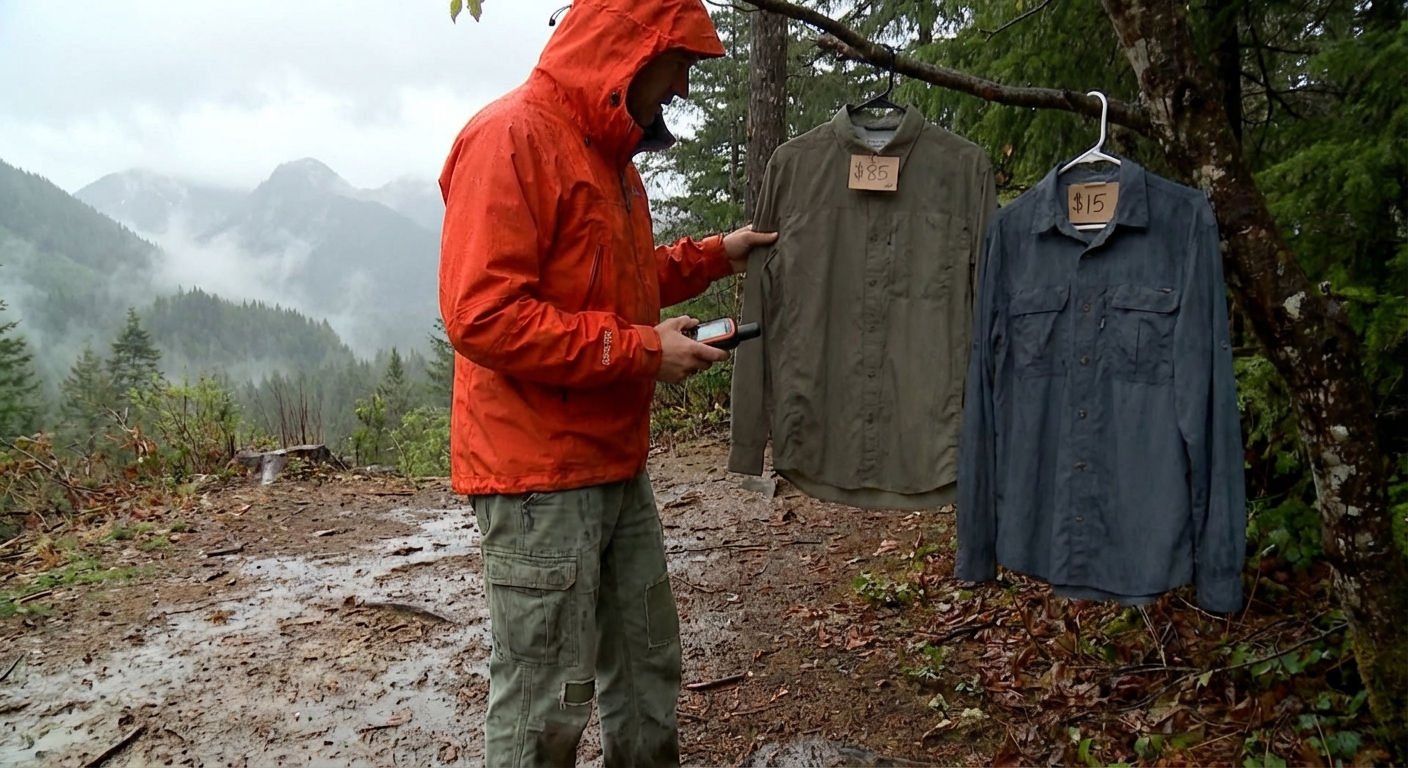
A lot of people assume serious hiking demands thousand-dollar outfits. That’s marketing talking, not the trail.
You Don’t Need a Designer Wardrobe to Hike Hard
Yes, quality gear matters—but not every piece has to be top-shelf. This guide breaks down trail apparel by category, comparing budget and premium options, where the extra money actually helps, and where it doesn’t move the needle.
If you’re outfitting for your first overnight or upgrading a worn-out kit, this will show you how to spend smart instead of just spending big.
How to Judge Value in Trail Apparel
Forget brand names for a second. Focus on:
Function – Does it keep you warm, dry, and protected?
Durability – Will it survive a season or a thru-hike?
Weight – Does it justify its ounces in your pack?
Comfort – Can you hike all day in it without hot spots or chafing?
Price alone tells you nothing. Some budget pieces punch above their weight; some premium gear is just shiny.
Base Layers: Where Budget Shines
What They Do
Base layers move sweat off your skin and provide a thin layer of insulation. They get washed more and abused more than almost any other layer.
Budget Options
- Synthetic tops from Decathlon, REI Co-op, or basic running brands.
- Price: $15–40.
- Pros: Fast-drying, durable, cheap.
- Cons: Stink faster than merino.
Premium Options
- Merino wool brands: Smartwool, Icebreaker, Kari Traa.
- Price: $60–100.
- Pros: Odor control, comfortable, good temp regulation.
- Cons: More fragile, slower drying, expensive.
Verdict
- Weekend hikers: Budget synthetic is more than enough.
- Thru-hikers or extended trips: One good merino base layer can be worth it just for the stink control and comfort—but expect to replace it eventually.
Where to save? Base layers are a safe place to run budget synthetics.
Midlayers: Fleece vs. Fancy Insulation
Old-School Fleece (Budget Workhorse)
- Brands: Columbia, Decathlon, generic grid-fleece on Amazon.
- Price: $25–70.
- Pros: Tough, warm when damp, cheap, easy to find.
- Cons: Bulkier and heavier than high-end active insulation.
A basic fleece hoodie at ~10–14 oz (283–397 g) will do 90% of what expensive active insulation does for a fraction of the cost.
Premium Active Insulation
- Brands: Patagonia (Nano-Air, R1 Air), Rab (Xenair), Arc’teryx (Atom series).
- Price: $160–300.
- Pros: Better movement, more breathable, often lighter for warmth.
- Cons: High price, sometimes more delicate fabrics.
Verdict
- On a tight budget? A $40–60 fleece is perfectly functional and reasonably durable.
- Doing high-output cold-weather trips often? Active insulation starts to earn its cost.
Most hikers can save here with a simple grid-fleece hoodie.
Insulation Jackets: Where Paying More Can Make Sense
This is one category where premium often matters—if you’re using it a lot.
Budget Synthetic Puffies
- Brands: REI Co-op, Decathlon, some Columbia models.
- Price: $60–150.
- Weight: 12–20 oz (340–567 g).
- Pros: Affordable, handle moisture relatively well, fine for weekend trips.
- Cons: Heavier and bulkier, somewhat lower warmth-to-weight.
Premium Down Jackets
- Brands: Rab, Mountain Hardwear, Arc’teryx, Feathered Friends.
- Price: $200–400+.
- Weight: 7–14 oz (198–397 g) depending on warmth.
- Pros: Excellent warmth-to-weight, packs tiny, long-lasting if cared for.
- Cons: Pricey, need protection from prolonged moisture.
Premium Synthetic Jackets
- Brands: Patagonia Nano Puff, Arc’teryx Atom, Rab Xenon.
- Price: $180–300.
- Pros: Good compromise for damp climates, more forgiving than down.
- Cons: Still heavier than down for same warmth.
Verdict
- Occasional summer backpacker: Budget synthetic is enough.
- Frequent hiker / shoulder seasons / alpine: A well-made down or quality synthetic is worth the money and ounces.
Spend more here if you routinely face cold evenings and shoulder-season trips.
Rain Jackets: Cheap vs. Reliable
Budget Rain Jackets
- Brands: Frogg Toggs, Marmot PreCip, REI Rainier.
- Price: $40–130.
- Pros: Affordable, good for occasional use, decent protection at first.
- Cons: Coatings wear faster, less breathable, cheaper zips and seams.
Frogg Toggs are ultralight and waterproof but fragile; great as a stopgap or for thru-hikers who accept disposability.
Premium Shells
- Brands: Arc’teryx, Rab, Outdoor Research, Patagonia.
- Price: $200–500.
- Pros: Better fabric (often 3-layer), more durable, more breathable, better hood designs and zippers.
- Cons: You feel the hit in your wallet.
Mid-Range Workhorses
- Brands: OR Foray, Rab Downpour, Patagonia Torrentshell.
- Price: $150–250.
- Pros: Excellent balance of price and performance for most hikers.
Verdict
If you routinely hike in wet, cold weather or in the mountains, your rain jacket is worth investing in. A mid-range shell is usually the best value point.
If you’re in dry climates or only hit rainy trails a few times a year, a solid budget shell is fine—just check it before each season.
Pants and Shorts: Don’t Overthink It
Budget Bottoms
- Options: Stretch nylon hiking pants from Decathlon, Eddie Bauer, REI Outlet, or even some workwear brands.
- Price: $30–80.
- Pros: Durable, serviceable, often on sale.
- Cons: A bit heavier and less refined in fit.
Premium Bottoms
- Brands: Arc’teryx Gamma, Fjällräven, Kuhl, high-end softshells.
- Price: $100–220.
- Pros: Excellent fit, better fabric hand, more durable stretch-wovens, often better pockets.
- Cons: High replacement cost if you shred them.
Verdict
- For most hikers, mid-range hiking pants in the $60–120 band make the most sense.
- Premium is nice if you bushwhack or scramble a lot, but it’s not mandatory.
Shorts can be very cheap—running shorts or basic synthetic hiking shorts often beat expensive options in comfort.
Socks and Underwear: Small Items, Big Difference
Socks
- Budget: REI Co-op, generic merino blends ($12–18).
- Premium: Darn Tough, FITS, Smartwool ($20–28).
Darn Tough’s lifetime warranty is real value: wear through a pair on a long hike and you can replace them.
Underwear
- Budget synthetic briefs/boxers work fine.
- Premium merino or technical synthetic (ExOfficio, Saxx, Icebreaker) add comfort and odor resistance.
Verdict
If you’re cutting corners, don’t skimp so hard here that you end up with chafe and blisters. A couple of good pairs of socks and decent underwear go a long way.
Gloves, Hats, and Small Accessories
Hats
- Simple caps and beanies are cheap and effective.
- Premium adds style and minor fit improvements, but function is similar.
Gloves
- Budget liner gloves: $10–25.
- Premium softshell or insulated gloves/mitts: $40–120.
Unless you spend a lot of time in sub-freezing conditions, budget or mid-range gloves are fine.
Buffs/Neck Gaiters
- Simple synthetic tube: $10–20.
- Merino Buff: $25–35.
Merino is nicer against the skin but absolutely not required.
Where Premium Really Helps (And Where It’s Just Hype)
Worth Paying For
- Rain Shell – If you’re in wet, cold, or mountain climates.
- Insulation Jacket – If you backpack in shoulder seasons or above treeline.
- Down Quality – High-fill down (800+) is a true weight saver for frequent backcountry users.
Nice but Not Necessary
- High-End Fleece/Active Insulation – Great but not essential if you have a solid budget fleece.
- Premium Hiking Pants – Comfort upgrade; durability gains vary.
Usually Overkill for Most Hikers
- Expedition-Grade Shells – Heavy, expensive, made for sustained alpine abuse.
- Technical Softshells for Mild Trails – Often too warm and heavy for standard backpacking.
Care Tips That Stretch Your Dollar
No piece—budget or premium—lasts long if you abuse it.
Basic Rules
- Wash less, but properly: Especially down and shells.
- Avoid heat and fabric softeners: They wreck technical fibers and coatings.
- Store loose, not compressed: Particularly down and synthetic insulation.
Repairs
- Patch shells and pants with Tenacious Tape or Gear Aid.
- Stitch small seam failures at home before they grow.
- Don’t toss gear for cosmetic damage.
A $200 jacket that lasts 8 years is cheaper per trip than a $90 one that dies in two.
Sample Kits by Budget (Head-to-Toe)
Starter Budget Kit (~$250–350)
- Synthetic tee & long-sleeve (~$40 total)
- Cheap fleece hoodie (~$40)
- Budget synthetic puffy (~$80)
- Marmot PreCip or REI Rainier shell (~$90–120)
- Stretch hiking pants (~$40–60)
- Generic synthetic underwear (~$20)
- Mid-range socks (2 pairs, ~$30–40)
Strong enough for most 3-season weekend trips.
Balanced Mid-Range Kit (~$500–750)
- Merino or premium synthetic base (~$60)
- Grid-fleece (~$100)
- Quality down or synthetic puffy (~$200)
- Mid-range 3L shell (~$200)
- Good hiking pants (~$90–120)
- Darn Tough socks, premium underwear (~$80 total)
Ideal for regular backpackers who hit variable weather.
Long-Mileage / Thru-Hiker Kit (~$700–1,000)
- Lightweight merino or high-end synthetic base (~$70–90)
- Light active insulation or technical fleece (~$150–220)
- Ultralight down jacket (~$220–320)
- Lightweight but solid 3L shell (~$220–350)
- UL trail pants or shorts (~$60–120)
- Multiple pairs of high-end socks and durable underwear (~$100+)
Heavier on the wallet, lighter on your back and feet for thousands of miles.
Final Thoughts: Build Slow, Upgrade Smart
Don’t try to buy the “perfect kit” in one season. Start with what you can afford, then upgrade based on actual trail experience:
- Cold at camp? Improve your insulation.
- Wet and miserable? Upgrade the shell.
- Constant rips in gear? Step up fabric durability.
The trail is blunt feedback. Listen to it, not just the price tags.