
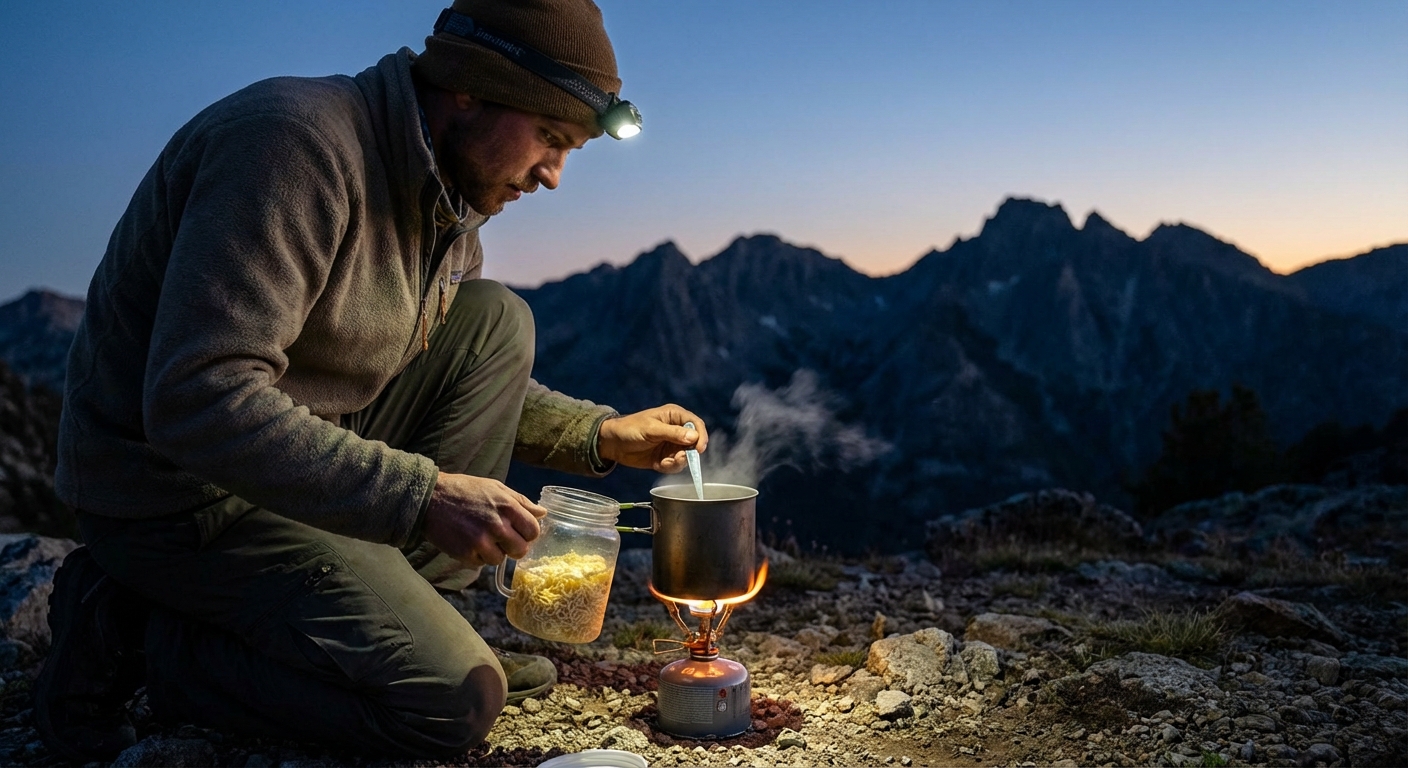
On long trails, your stove becomes a constant question: carry it or ditch it? Cold soakers praise the freedom and weight savings. Stove users swear by the morale boost of a hot meal after a 25‑mile day.
The Real Trade: Weight vs. Morale
Both camps are right—and both gloss over the real trade‑offs.
This isn’t a romantic take. It’s a blunt comparison built around miles, calories, and weight.
What Cold Soaking Actually Is (And Isn’t)
Cold soaking means rehydrating food in unheated water, usually in a dedicated container like a peanut butter jar, Talenti gelato jar, or a purpose‑built cold soak container.
Pros
- No stove, no fuel, no pot: saves 8–16+ oz.
- No dealing with canisters, alcohol, or igniters.
- Fewer moving parts to fail.
- Easier on trails with fuel restrictions.
Cons
- No hot food or drinks. Ever.
- Longer rehydration times (20–60 minutes).
- Some foods just never fully soften.
- Low morale on cold, wet, or miserable days.
If you’re only out on dry, warm trails for short sections, it can be a smart call. On a 5‑month thru, the story is different.
What a Hot Meal System Really Costs
Weight Breakdown (Typical 3‑Season Setup)
- Canister stove: 2.5–3.5 oz.
- 750–900 ml titanium pot + lid: 3.5–5 oz.
- Lighter + backup: 1–1.5 oz.
- Small windscreen: 0.7–1 oz.
- 100 g fuel canister (empty 3.5 oz, fuel 3.5 oz): ~7 oz full.
Total starting hit for a week or so: 15–18 oz.
After a few days of burning fuel, effective carried weight drops. The stove and pot are static weight; fuel burns off.
What You Get for That Weight
- Hot dinner and/or breakfast daily.
- Sterilization of sketchy water in a pinch.
- Option to eat foods that need heat to be edible or safe.
- Warm drinks when you’re cold, wet, and pissed off.
On a long trail, those are not minor benefits.
Food Options: Where the Real Difference Lives
Cold Soak‑Friendly Foods
- Ramen (crushed)
- Couscous
- Instant mashed potatoes
- Instant rice (some brands)
- Oats
- Dehydrated refried beans
- Cereal, granola, protein powders
These rehydrate reasonably well in cold or lukewarm water.
Foods That Are Miserable Cold‑Soaked
- Regular pasta (especially thicker shapes).
- Many dehydrated commercial meals.
- Lentils/beans that aren’t instant or pre‑cooked.
- Anything with a lot of solid fat that needs melting.
Caloric Density & Flexibility
Both systems can hit the same calories per ounce, but heat gives you far more variety. It also lets you stretch cheap staples (rice, pasta, bulk dehydrated goods) into better meals.
If you’re on trail for months, variety matters as much as pure calories.
Price Tiers: Cold Soak vs. Hot System
Cold Soak Setup
- Container (reused jar): free.
- Purpose‑built container (Vargo, CNOC, etc.): $15–$30.
- Extra bottle for drinking: $2–$15.
Total: $0–$40.
Hot Meal Setup
- Budget:
- BRS stove + cheap aluminum or titanium pot + lighter: ~$40–$70.
- Mid‑range:
- MSR PocketRocket 2 + Evernew/Toaks pot + spoon: $110–$160.
- Premium:
- Wind‑resistant stove or Jetboil + high‑end pot/spoon: $180–$250.
Conclusion: Cold soaking wins the cost battle hands down. But you knew that.
Durability & Failure Modes
Cold Soak System
What can fail?
- Threads crack on jar.
- Lid leaks.
- Jar melts or warps if someone forgets and pours hot water in.
- Funky smells build up.
Solutions are simple: replace the jar in town. Cheap, easy, low stress.
Stove System
Potential issues:
- Stove threads damaged.
- Igniter fails.
- Canister leaks or valve sticks.
- Pot warped or crushed.
You mitigate by:
- Carrying a lighter separate from the stove.
- Keeping stove in a small protective pouch.
- Not sitting on your cook pot.
- Checking O‑rings periodically.
If you handle your gear like gear, not like trash, stove failures are rare.
Performance in Real Conditions
Cold, Wet, Miserable Days
- Cold Soak: Your dinner is the same temperature as the stream. You eat it anyway, but your core temperature doesn’t get any free help. Morale tanks.
- Hot Meals: Boiling food and hot drinks genuinely help pull you out of the hole.
Hot, Dry Desert Sections
- Cold Soak: No flame means no fuel burden. You’ll already be hauling a ton of water weight; stove weight feels worse here.
- Hot Meals: No shade, no time, and no patience to cook? Most hikers default to quick cold snacks anyway.
Shoulder Seasons & High Elevations
- Cold Soak: Works, but gets old. You’ll be sleeping cold, waking cold, and eating cold.
- Hot Meals: That nightly boil becomes an anchor ritual. Worth the ounces for many.
Hybrid Strategy: The Grown‑Up Answer
Plenty of experienced hikers move between systems or run stove‑light, not stove‑less.
Option 1: Stove for the Cold Half, Cold Soak for the Warm Half
- Start a northbound thru in early spring with a stove.
- Drop the stove and fuel in town during sustained hot, dry months if you know your route and water.
- Pick it up again heading into colder mountains or later season.
Option 2: Ultralight Stove Setup That Mimics Cold Soak Simplicity
- Alcohol stove or tiny canister stove.
- 550–650 ml pot that doubles as your mug.
- No bowl, no extras.
- One lighter, one backup.
Weight penalty over cold soak: often 8–10 oz. Cost: some gear and a little time each evening.
Option 3: Cold Soak Days, Hot Meal Days
Some hikers cold‑soak breakfast and lunch, then only cook dinner. Others skip cooking on big mileage days and cook more on short days or in camp with time and good weather.
You don’t owe any system ideological purity.
Care Tips for Both Systems
Cold Soak Setup
- Clean daily: A quick rinse keeps bio‑gunk down.
- Deep clean in town: Hot soapy water between sections.
- Inspect threads: If you see cracks, replace immediately.
- Avoid strong flavors: Garlic and curry linger; expect some funk.
Stove Setup
- Dry stove and pot fully to avoid corrosion.
- Don’t store canister attached to stove long term.
- Protect pot from crushing in your pack (stuff with soft gear).
Who Should Choose What?
Cold Soak Makes Sense If:
- You hike mostly in warm climates.
- You’re committed to simple, repetitive meals.
- You value maximum simplicity and minimum gear over comfort.
- You’re disciplined enough not to start hating your food.
Hot Meals Make Sense If:
- You hike in variable weather or cold seasons.
- You care about hot coffee/tea for mornings or morale.
- You want flexibility in food choices and resupply.
- You like having a backup way to boil water in emergencies.
Bottom Line
Cold soaking will save you ounces; a stove will save your spirit on rough days.
Neither option is universally “better.” The smart move is to match your system to the trail, the season, and your own tolerance for eating lukewarm mush in the rain.
Test both on shorter trips. See what you actually reach for when you’re exhausted. Then build your system around that reality—not around what sounds good on the internet.