
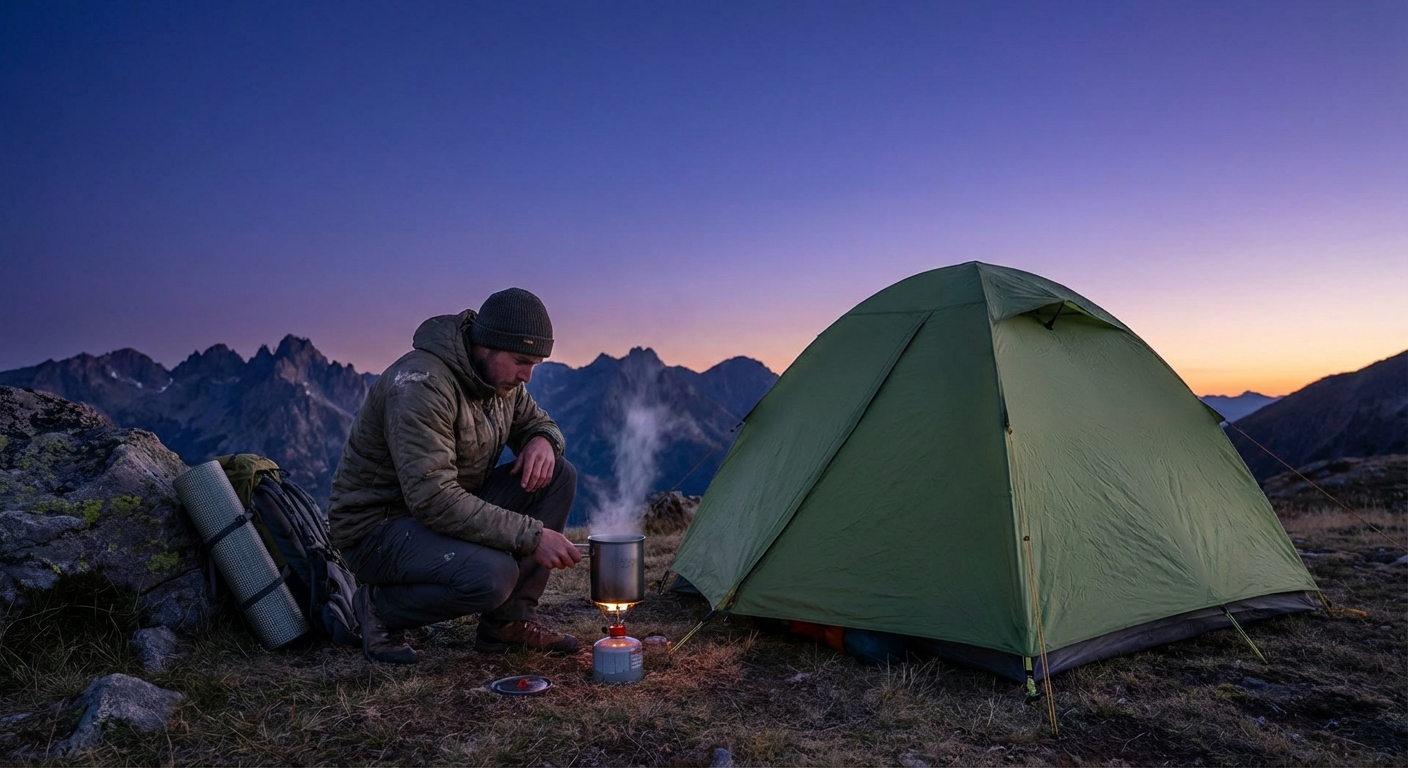
If your pack kitchen looks like a home goods aisle, you’re doing too much. Every extra lid, mug, or gadget is more weight on your shoulders and more junk to dig through when you’re cold and hungry.
Strip Your Kitchen Down to What Works
A streamlined kitchen doesn’t mean suffering through bland sludge. It means a simple, durable, efficient setup that does the job every single night.
This is how to run a lean backcountry kitchen that still delivers hot, decent food.
The Core: One Pot to Rule Them All
For most hikers, one pot is enough.
Picking the Right Size
- Solo, boil‑only: 550–750 ml.
- Solo, real cooking / big appetites: 800–900 ml.
- Two people boil‑only: 900–1100 ml.
- Two people, real meals: 1.3–1.6 L.
If you’re uncertain, 800–900 ml for solo and 1.3 L for a pair are hard to beat.
Material & Shape
For a streamlined setup:
- Titanium, tall and narrow: Best for light, boil‑heavy use.
- Hard‑anodized aluminum, slightly wider: Better if you actually cook rice, pasta, or thicker meals.
Avoid odd shapes and protrusions that don’t pack well. A pot that nests your stove, lighter, and a small gas canister saves space and protects your gear.
Field‑Tested Picks:
- Solo: Evernew Ti 900 ml, Toaks 750 ml, Snow Peak Trek 900.
- Pairs: GSI Halulite 1.1–1.4 L, MSR Trail Lite pots.
The Flame: Simple, Reliable, and Easy to Use Tired
You want a stove you can light half‑asleep in the rain.
Minimalist Stove Choices
Upright Canister Stove
- Best all‑round option for weekenders and thru‑hikers. - Good blend of speed, weight, and simplicity.
Examples:
- Budget: BRS‑3000T (handle gently, protect from wind).
- Solid workhorses: MSR PocketRocket 2, Soto Amicus.
- Premium: Soto WindMaster (top pick in wind).
Alcohol Stove (for Ultralight, Boil‑Only Types)
- Featherlight, but slower and more wind‑sensitive. - Great when you’re weight‑obsessed and conditions are mild.
Keep It Simple Loadout
Your core cook kit should realistically be:
- 1 stove.
- 1 pot with lid.
- 1 long‑handle spoon.
- 1 lighter + 1 backup ignition (mini Bic + ferro rod or matches).
- 1 small cloth or bandana for handling hot pots and wiping condensation.
That’s it.
Fuel Planning Without Guesswork
You don’t need to be a scientist, but you should understand rough fuel stats.
Canister Fuel Rule of Thumb
For 3‑season, boil‑based cooking:
- 6–10 g per 500 ml boil, with a half‑decent windscreen or sheltered cooking.
- 20–30 g per day for 2 boils (dinner + hot drink/breakfast).
Practically:
- Solo 3–5 days → 100 g canister is enough.
- Solo 7–10 days → 230 g canister gives margin.
Alcohol Fuel Rule of Thumb
- 0.6–0.8 oz (18–24 ml) per 500 ml boil.
- Plan 1.5–2 oz (45–60 ml) per day for two boils.
Track your actual use for a few trips. After that, you’ll know how many burns you get per canister or bottle.
Rugged vs. Ultralight: What’s Worth the Trade
Go Ultralight On:
- Utensil: Plastic or titanium spoon, 0.2–0.6 oz. Sporks are fine, but long‑handles are worth it for bag meals.
- Accessories: Skip cups, bowls, and fancy cutting boards.
- Extras: Foil lid instead of heavy metal lid if your pot didn’t come with a light one.
Go Rugged On:
- Pot: A slightly heavier but more durable pot beats a super‑thin one that dents or warps.
- Stove stability: Three solid pot supports and a broad burner head are worth an extra ounce over a twitchy micro‑stove that dumps dinner in the dirt.
Price Tiers
- Budget Setup (~$60–$80):
- BRS or budget canister stove.
- GSI Halulite or Toaks budget titanium pot.
- Plastic long spoon.
- 100 g canister.
- Mid‑Range (~$110–$160):
- MSR PocketRocket 2 or Soto Amicus.
- Evernew Ti pot.
- Titanium long spoon.
- Premium/Thru‑Hike (~$160–$250):
- Soto WindMaster or integrated system (Jetboil if mostly boiling).
- High‑end Evernew/Snow Peak pot.
- Top‑tier titanium spoon, windscreen, and fuel carefully optimized.
Food Strategy for a One‑Pot Kitchen
Your kitchen is only as efficient as your meal plan. Build around:
One‑Pot Staples
- Ramen + add‑ins: Peanut butter, dehydrated veg, oil, foil‑pack meat.
- Instant potatoes: Mix with cheese powder, oil/butter packets, jerky bits.
- Couscous: Cooks in minutes, takes seasonings well.
- Pre‑cooked rice packets: Quick reheat; eat straight from pot.
Breakfast That Doesn’t Drag
- Overnight oats in your pot or cold soak jar.
- Instant coffee or tea directly in the pot; quick rinse after.
Minimize Cleanup
- Add just enough water so food doesn’t burn but you don’t have soup unless you want soup.
- Use tortillas as “pot scrapers.” Wipe the pot clean with a piece, then eat the scrap.
Cooking Technique: Don’t Burn Your Calories
- Use a lid: Cuts fuel use noticeably.
- Stir early, then occasionally: For thicker meals like potatoes or cheesy pasta.
- Turn down the flame: Once boiling, you rarely need full blast. Simmer saves fuel and prevents scorching.
- Cozy cooking: Bring to a boil, then wrap pot in a jacket or cozy to finish cooking off‑flame (works great with instant rice and noodles).
Care and Longevity
Treat your simple kit right and it’ll last for thousands of trail miles.
In the Field
- Pack smart: Nest stove and canister in the pot with a small cloth to prevent rattling and scratching.
- Cool before capping: Don’t slam a hot lid onto a fully boiled pot and then stuff it into your pack—condensation leads to funk.
- Protect threads and valves: Keep your stove in a small pouch to avoid bending pot supports or clogging the valve with dirt.
At Home
- Rinse and dry everything thoroughly.
- Check o‑rings on canister stoves.
- Lightly scrub carbon buildup on pot bottoms; don’t obsess over scratches.
When to Add Complexity (And When Not To)
Add gear only if there’s a clear, repeating need:
- Frying pan: Only if you’re regularly cooking real breakfasts or fish. Otherwise, skip it.
- Separate mug: Only if you truly can’t stand drinking from your pot and you drink hot beverages constantly.
- Cutting tools: A small pocketknife handles most food tasks. Leave the chef’s knife at home.
If you haven’t used a piece of kitchen gear after three trips, it doesn’t belong in your pack.
The Bottom Line
A lean trail kitchen is about discipline, not deprivation. One pot, one reliable flame, a long spoon, and a smart food plan will handle almost every backcountry trip you’ll take.
Strip the kitchen down, keep it tough and simple, and focus your energy on the miles, not the mess kit.